A course price is only one part of the commitment. Materials, software, transportation, scheduled attendance, and the timing of payment can change whether a learning plan is workable. A discount, a scholarship, and reimbursement can also operate differently. Before enrolling, build a plain-language map of what is known, what is conditional, and what still needs a decision.
Massachusetts' free-community-college overview describes assistance for eligible students and directs readers to a college financial-aid office for an individual determination. It does not mean every course, every learner, or every related expense is covered. The cost map here is an organizational tool, not financial advice or a funding calculation.
Use five separate rows
Start with tuition and required fees. Then list materials and required technology. Add travel or other participation logistics that apply to you. Make a separate row for time, including fixed class meetings and expected preparation. Finally, list payment timing: what is due, to whom, and when, based on the actual current terms.
Do not force every item into a dollar estimate. If a schedule conflict is unresolved, label it as a constraint. If you do not know the cost of required software, mark it unknown. An honest blank is safer than an invented number that makes the total look reassuring.
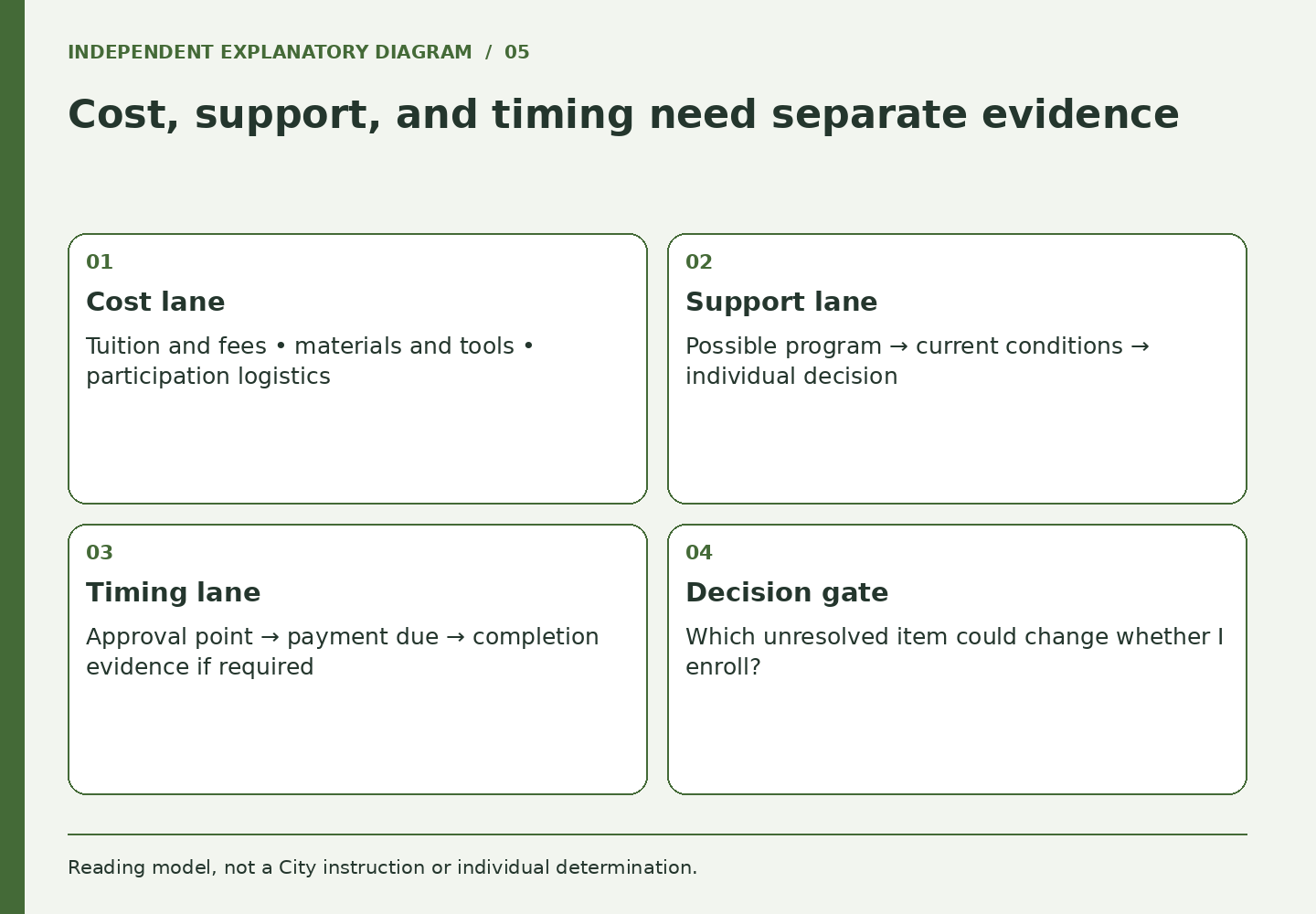
Keep support beside the cost, not hidden inside it
| Possible support | Question to resolve | Evidence to keep |
|---|---|---|
| Discount | Which charges and enrollment types qualify? | Current terms and the actual adjusted price |
| Scholarship | Has an award been made for this program and period? | Official award and conditions |
| Reimbursement | What approval and completion evidence are required? | Current rules and written approval where required |
| Other aid | How does it interact with other funding? | Determination from the responsible office |
An application is not an award. An encouraging conversation is not a payment confirmation. A course appearing on an eligible list does not necessarily mean you personally qualify for support. Keep those states distinct so you can see what commitment you would be making before each decision is settled.
Read the exit terms while entry is still optional
Locate the current cancellation, withdrawal, refund, and deferral terms that apply to the offering. Check which dates change your options and whether separate providers control different charges. Do not assume that an employer's funding decision changes the school's payment rules or that withdrawing from a course automatically cancels a software subscription.
If the terms are unclear, ask the responsible provider for clarification before paying. This publication cannot resolve an individual contract or tell you which charges are refundable. Its role is to help you identify the question early enough to make the answer useful.
Compare a feasible plan with a hopeful plan
Consider a fictional learner who has found a relevant course but is waiting on support. The hopeful version treats the expected funding as certain and ignores the payment date. The feasible version records the pending decision, identifies the date by which it must be resolved, and considers a later offering if necessary. Both may end in enrollment, but only the second makes the uncertainty visible.
Finish with a short decision note: confirmed cost items, unresolved items, required approvals, and the next date that matters. Update it when an official answer arrives. A smaller course or a later term can be a sound choice when it lets you learn without relying on assumptions about money or time that have not yet been confirmed.