In this guide
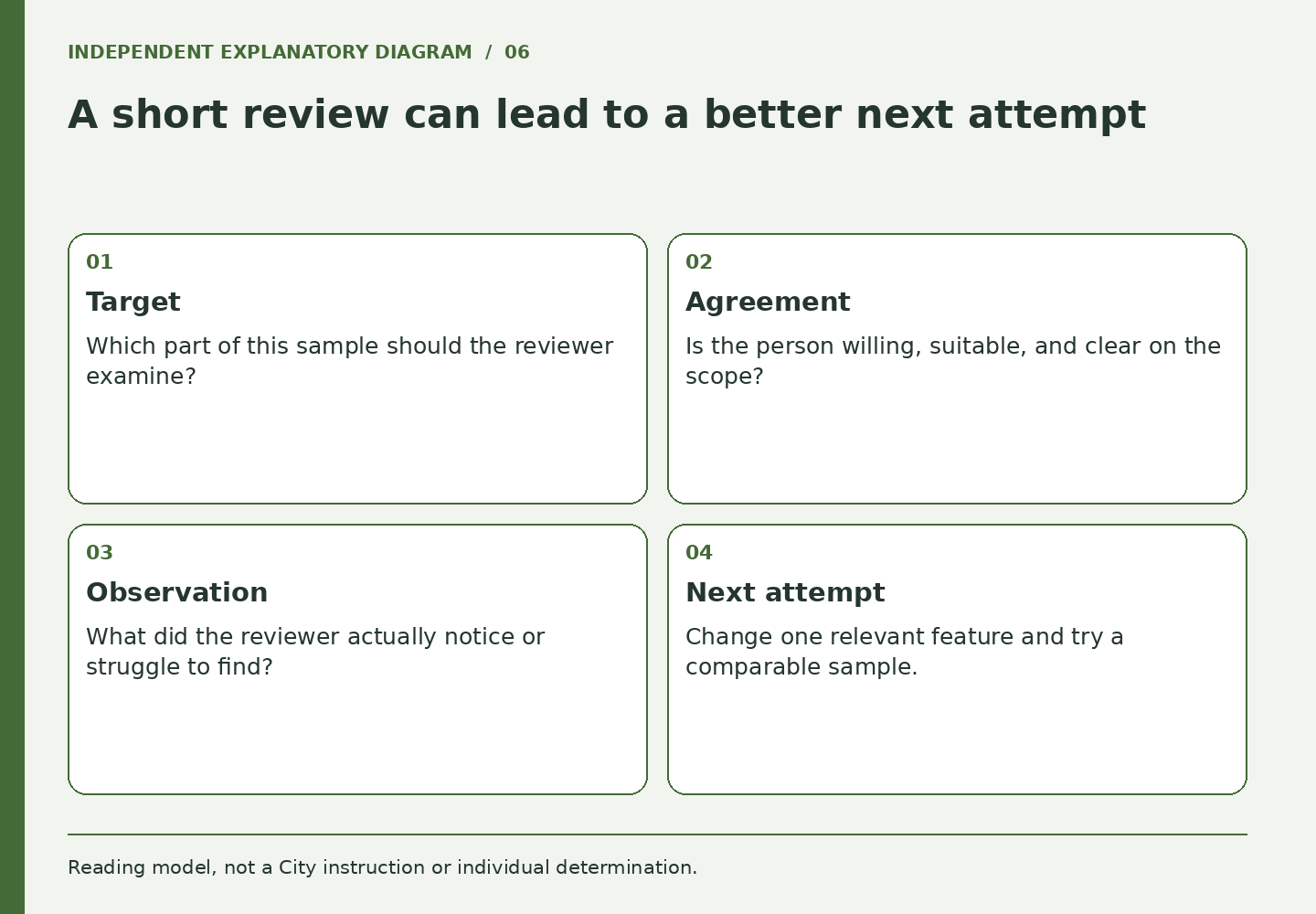
Feedback is most useful when both people understand what is being reviewed. A learner may want to know whether an explanation is clear, while a colleague comments on the formatting. A reviewer may spend twenty minutes rewriting something when the learner needed one observation. A small feedback agreement makes the exchange more focused and protects both people's time.
Boston's Learning and Development function provides a public institutional context for employee learning. The method here is an independent practice exercise. It is not an official appraisal, a supervisory procedure, or a substitute for required review of work that affects residents, staff, or operations.
Ask whether the person is willing and suitable
Choose someone who can give the kind of observation you need, and ask whether they have time. Familiarity with the task can help, but a newcomer may be the right reviewer when you are testing whether instructions make sense to a new reader. Do not treat a colleague's availability as automatic or imply that they have authority to approve a process they do not own.
Make the scope small. “Could you spend ten minutes checking whether the next action is clear in this fictional example?” is easier to consider than “Could you mentor me on communication?” A larger mentoring relationship may be valuable, but it deserves its own conversation rather than being hidden inside a quick review request.
Give the reviewer a target and a boundary
State the learning target, the nature of the sample, and what you want them to observe. If the artifact is a practice draft, label it clearly. If you want feedback on the explanation rather than the underlying policy, say so and use content that does not create confusion about real rules.
Choose two questions at most for a short review. For example: Where did you lose track of the sequence? Which instruction would you need clarified before continuing? Avoid asking a reviewer to judge your whole professional ability from one sample. Narrow questions produce observations you can act on.
Separate observation, interpretation, and suggestion
An observation describes what happened: the reviewer looked in two places for the deadline. An interpretation suggests why: the label may be unclear. A suggestion proposes a change: place the date beside the action. These are connected, but they are not the same. Keeping them separate lets you consider more than one explanation or solution.
Ask for an example when feedback is vague. “It feels complicated” can become useful if the reviewer identifies the sentence or step that caused the difficulty. You do not need to defend every choice immediately. First make sure you understand what the reviewer actually experienced.
Revise one important feature
Changing everything at once makes it hard to know what helped. Choose the issue most closely related to the learning target, revise it, and make another attempt. For a fictional checklist, you might first clarify the action labels rather than simultaneously changing the order, typography, and level of detail.
Tell the reviewer what you changed if you ask for a second look. Keep the follow-up proportionate to the time they agreed to spend. Their role is to provide useful observations, not to become responsible for finishing your artifact or guaranteeing its suitability for live use.
Keep a modest learning note
Record the task, the review question, one useful observation, and the next attempt. Avoid collecting personal judgments about colleagues or turning informal feedback into an unofficial performance record. Store any workplace material according to applicable rules; your personal reflection can often remain general.
The result of good feedback is not always a better-looking document. Sometimes it is a clearer question, a smaller task, or recognition that you need instruction before more practice. Close the exchange by acknowledging the specific help and explaining the next step. That makes the learning visible without overstating what one review has established.